
Food labels in Canada have evolved to make sugar content easier to understand—but many people still wonder how sugar fits into total carbohydrates, and what really impacts blood sugar. This Q&A guide breaks it down in a clear, practical way.
Key Highlights
- Sugars are part of total carbohydrates
- Total carbohydrates have the biggest impact on blood sugar
- Subtracting fibre helps estimate available carbs that affect glucose
- New Canadian labels group added sugars together for easier identification
- The “High in Sugars” symbol (2026) helps flag high-sugar foods quickly
What does “sugars” mean on the Nutrition Facts table?
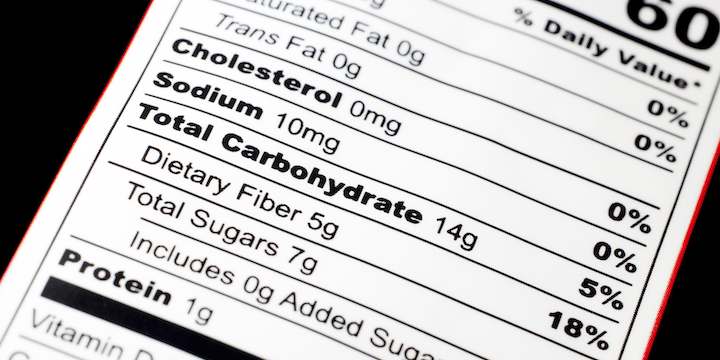
The “Sugars” line shows the total amount of sugar (in grams) per serving, including:
- Naturally occurring sugars (like those in fruit and milk)
- Added sugars (like white sugar, syrups, or honey)
This number combines both types, so it doesn’t tell you directly how much sugar has been added.
What’s the difference between sugars and total carbohydrates?
This is one of the most important concepts:
- Total carbohydrates include:
- Sugars
- Fibre
- Starches
All sugars are carbohydrates, but not all carbohydrates are sugars
Why this matters:
- Total carbohydrates have the biggest impact on blood glucose levels
- Sugars tend to raise blood sugar more quickly, especially when they are added and not paired with fibre or protein
How do I figure out what actually impacts blood sugar?
To better estimate the carbohydrates that affect blood glucose, you can calculate:
Available carbohydrates = Total carbohydrates – Fibre
Why subtract fibre?
- Fibre is not digested into glucose
- It slows digestion and helps reduce blood sugar spikes
Example:
- Total carbohydrate: 30 g
- Fibre: 8 g
- Available carbs = 22 g
This “available carbohydrate” (sometimes called net carbs) gives a more practical estimate of what will raise blood sugar.
Note: This approach is commonly used in diabetes management, but individual responses can vary.
What are the newer Canadian rules for sugar labelling?
Canada has introduced updates to make sugar easier to identify:
- Sugars are grouped in the ingredient list
All added sugars must be listed together under “Sugars,” followed by each type in brackets.
Example: Sugars (glucose, honey, sugar) - Ingredients are listed by weight
If sugars appear near the beginning, the product likely contains a high amount of added sugar. - Front-of-package “High in Sugars” symbol (2026)
Foods that exceed set thresholds must display a “High in Sugars” symbol on the front.
This helps you quickly spot high-sugar products.
How can I tell if sugar has been added?
Check the ingredient list for the “Sugars” grouping. Common added sugars include:
- Glucose, fructose, sucrose
- Cane sugar, brown sugar
- Corn syrup
- Honey, maple syrup
- Fruit juice concentrates
Multiple types of sugar often indicate a more processed, higher-sugar product.
How does % Daily Value (%DV) help?
The % Daily Value gives a quick guide:
- 5% DV or less = a little
- 15% DV or more = a lot
Use it to compare products and choose lower-sugar options more easily.
Are “natural” sugars better than added sugars?
Not necessarily. While sugars in whole foods come with fibre and nutrients, added sugars—even from natural sources like honey or maple syrup—still count as added sugars when included in packaged foods.
How do sugar and carbohydrates affect blood sugar?
- Total carbohydrates (minus fibre) determine how much your blood sugar will rise
- Sugars, especially added sugars, can cause faster spikes
- Fibre, protein, and fat help slow absorption and stabilize blood sugar
Focusing only on sugar can be misleading—looking at total carbs and fibre together gives a more complete picture.
Your 3-Step Action Plan
- Start with total carbohydrates
Use this as your primary guide—but always consider fibre alongside it. - Subtract fibre for a clearer picture
Estimate available carbs (Total carbs – Fibre) to understand blood sugar impact. - Scan for added sugars
Use the ingredient list and watch for the “High in Sugars” symbol to limit highly processed, sugary foods.
Understanding how sugars, total carbohydrates, and fibre work together gives you a much clearer picture of what’s in your food. With these updated Canadian labelling tools, you can make more confident choices that support steady energy and better blood sugar control.