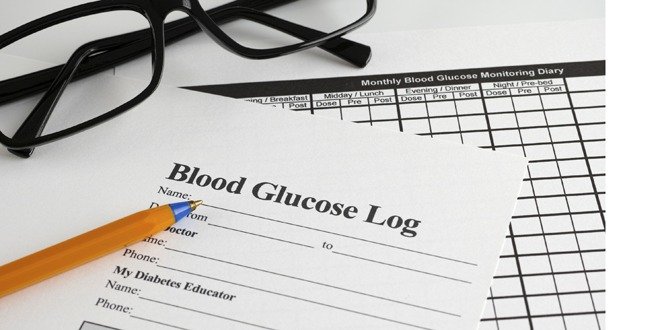
This section is dedicated to providing you with everything you need to know about diabetes monitoring and control. Monitoring is a vital part of diabetes management, and is the key to delaying or preventing diabetes complications. Of course, monitoring of your blood glucose levels to ensure you are reaching your targets is important, but so are regular monitoring tests like A1C, blood pressure, eye and foot exams.
Monitoring articles
 What are the recommended blood sugar targets for people with diabetes?Keeping your blood sugar levels in their target ranges is very important. When blood sugar levels drop too low, this results in hypoglycemia, which can make you feel light-headed, nauseous and unable to concentrate.
 Time in range: What is it? How do we measure it? Why is it important?If you use continuous glucose monitoring, it’s important to know your time in range, which helps you better understand your glucose patterns. Read this expert blog to learn more about time in range.
 Continuous glucose monitoring: is it right for me?Continuous glucose monitoring (CGM) is a newer, accurate way to understand your glucose levels. Read this expert article to learn more about continuous glucose monitoring.
 Tips for making the most of your continuous glucose monitoring systemContinuous glucose monitoring (CGM) systems are a welcome addition to the variety of devices that people with diabetes can take advantage of to ensure they keep glucose levels in check.
 A1C...what it should mean to me!If you have diabetes, it is important to know what the A1C (sometimes called hemoglobin A1C) test is, and how the diabetes team uses the A1C.
 Is your blood glucose monitor accurate? How do you know?Every day, people living with diabetes use their blood glucose monitoring results to make self-management decisions. How accurate should your blood glucose monitor be? What do you need to know about blood glucose monitor accuracy?
 Continuous glucose monitors – less pain more gain!Although it is true that CGM can help you escape from the pain, mess, and inconvenience of traditional blood glucose monitoring, there are many more advantages to CGM use. Read this expert blog to learn what continuous glucose monitoring may do for you.
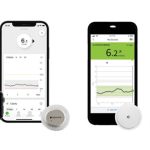 Glucose Sensors Comparison ChartThis chart provides a comprehensive comparison of three leading glucose sensors: the Dexcom G7, Freestyle Libre 2, and the Medtronic Guardian Connect or Guardian 3 (compatible with 770G/780G insulin pumps). It covers key aspects like sensor features, insertion parts, wearable pieces, sensor sites, warm-up time, wear time, display devices, and additional functionalities.
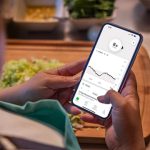 Continuous glucose monitoring: seeing is believing Can you guess the exact weight of something without a scale? The same applies to guessing what your glucose (sugar) level might be at any given time of the day. However, continuous glucose monitoring (CGM) devices make the invisible, visible.
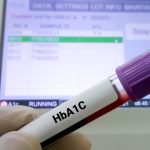 What’s the difference between A1C and blood sugar?The terms A1C and blood sugar are frequently used when talking about diabetes. But what is the difference between A1C and blood sugar, and how do they relate?